 medium.com/@nicholas-mukhtar?source=rss-f6af782bb832------2

The client had everything a consultant is supposed to want. Revenue was climbing. The team was doubling. New contracts were landing faster than the company could onboard them. And when Nicholas Mukhtar walked into the firm’s offices for the first time, the founder greeted him with the kind of confidence that comes from watching a line on a chart go up and to the right for eighteen straight months.
Within six weeks, Mukhtar would recommend that the founder slow down.
The engagement, which Mukhtar discusses in broad terms without naming the company, became a turning point in how the Fort Lauderdale-based management consultant thinks about growth. Before this project, he understood intellectually that speed and sustainability were different things. After it, he knew it the way you know something you’ve watched fall apart in front of you.
Before the Client
Mukhtar had built his career on an unconventional trajectory. At twenty-two, one year out of Wayne State University, he founded Healthy Detroit, a nonprofit that turned city parks into community health centers. By 2017, the organization managed a $15 million annual budget and had mobilized over $100 million in funding. The American Public Health Association named it the National Public Health Organization of the Year. He earned dual master’s degrees in Public Policy and Public Health from Johns Hopkins as a Bloomberg Fellow, advised Speaker of the House Paul Ryan, and contributed to the White House Office of American Innovation before founding Tera Strategies, his management consulting firm in Fort Lauderdale.
That public health background gave him a framework most business consultants don’t have. Epidemiologists are trained to look upstream, to trace symptoms back to systems. Mukhtar carried that instinct into corporate work. Where a traditional advisor might look at a struggling department and prescribe a restructuring, he tends to ask a different question: what conditions produced this problem in the first place?
The client who came to him in the early months of his private-sector consulting career was running a mid-size professional services firm. Growth was rapid. The founder had a clear vision and a genuine talent for closing deals. The problem was everything that happened after the deal closed.
Where It Started Breaking
Projects were slipping. Deadlines moved. Client satisfaction scores, once a point of pride, had started drifting downward. The founder assumed the answer was more people, more systems, more software. He’d already hired a project management team, purchased new tools, and brought in a fractional COO. None of it was working.
Mukhtar spent his first two weeks doing what he always does: listening. He sat in on team meetings. He had one-on-one conversations with employees across every level of the organization. He asked the same question in different ways. What’s going well? What isn’t? And where do you get stuck?
The answers, across dozens of conversations, converged on a single theme.
“I kid you not, that seems to be 90% of the problems across the board,” Mukhtar has said of the pattern he sees in client after client. “It’s just people need to talk.”
In this company, the founder was making commitments to clients that the delivery team hadn’t agreed to. The delivery team absorbed those commitments without pushing back, because nobody had built a process for doing so. New hires arrived with no onboarding beyond a Slack invite and a link to the company wiki. Managers were promoted because they were good at their individual roles, not because anyone had prepared them to lead. The faster the company grew, the wider each of these gaps became.
The business was scaling its revenue while its capacity to function eroded underneath.
Tracing It Upstream
Mukhtar frames this kind of situation through a lens he picked up at Johns Hopkins. In public health, a system designed for 500 patients that suddenly absorbs 2,000 doesn’t just get slower. It breaks in specific, predictable ways. Triage collapses. Communication between departments degrades. The people doing the work burn out, and the ones managing them lose visibility into what’s actually happening on the ground.
The same dynamics play out in companies that grow faster than their operations can support. Research published by IE University found that the focus on scalability often obscures the need to develop the management and administrative capacity that makes sustained growth possible. Talent development, internal communication structures, governance clarity: these tend to be treated as problems to address after growth occurs. By then, the cost of retrofitting them is exponentially higher.
Mukhtar saw exactly this in his client’s firm. The company had tripled its headcount without ever codifying how decisions were made, who owned what, or how disagreements between departments got resolved. The founder was still operating as if he could personally oversee every project. He couldn’t. And because the systems to replace that oversight were never built, the organization was running on goodwill and improvisation.
“A lot of business owners treat systems as something to construct after growth occurs,” Mukhtar said. He argues for the opposite approach. Operational infrastructure should precede the growth it’s meant to support, not chase it.
A Three-Week Pause
Mukhtar’s recommendation surprised the founder. He didn’t suggest hiring more people or rolling out a new technology platform. He proposed a pause.
For three weeks, the company stopped taking new clients. The sales team kept working its pipeline, but nothing was signed. During that window, Mukhtar worked with the founder and his leadership team to build what he calls “clarity infrastructure,” the set of shared understandings that allow an organization to function without every decision routing through one person.
They mapped decision-making authority and established escalation paths. A structured onboarding process for new employees was created, one that took more than forty-eight hours. The sales team and the delivery team got a communication cadence so that commitments made to clients reflected actual capacity.
None of this was flashy. Most of it would’ve been invisible to anyone outside the company. The three-week pause cost the firm an estimated quarter-million dollars in delayed revenue.
It was, by Mukhtar’s account, the best investment the founder ever made.
Four Months Later
Within four months, client satisfaction scores returned to their previous levels. Employee turnover, which had been accelerating, stabilized. The founder reported something he hadn’t expected: he was sleeping through the night for the first time in a year.
The deeper shift, for Mukhtar, was conceptual. He’d always understood that speed without structure creates fragility. But watching it happen inside a single organization, in real time, recalibrated his instincts about what consultants should actually prioritize.
Clarity, he now argues, is the better predictor of long-term performance than speed. “The businesses that perform well over time,” he wrote in a subsequent analysis, “are the clearest ones.” Too many organizations mistake acceleration for progress, he says, making decisions faster without first establishing the conditions that make those decisions sound.
McKinsey’s 2025 research on operating model design reinforces the point. Even high-performing companies carry a 30 percent gap between a strategy’s full potential and what their operating model actually delivers. Speed, absent alignment, widens that gap.
What He Took From It
Mukhtar traces several principles back to this engagement. They now shape how he works with every client at Tera Strategies, from family offices navigating succession to startups preparing to hire their fiftieth employee.
Growth and health are measured differently. That’s the big one. A company can be growing while deteriorating. Revenue isn’t a proxy for organizational soundness. The metrics that matter most during scaling, Mukhtar argues, are the ones that most founders pay least attention to: communication clarity and decision-making speed at the middle-management level. The gap between what leadership believes is happening and what employees experience on the ground tells you more than any revenue chart.
Then there’s the difficulty of telling someone to slow down. It’s the hardest recommendation a consultant can make. “People just get pulled in so many different directions,” Mukhtar has said. “A lot of it is you just need to simplify things and have a conversation.” Simplification, in his experience, requires more discipline than complexity. It demands that leaders identify the single constraint most limiting their progress and resist the temptation to address four things at once.
The last lesson is personal. Mukhtar grew up in Metro Detroit, the son of Iraqi immigrants. His father, a high school soccer coach, taught him that relationships are built on genuineness. “If you give it to them straight, if you tell them what’s on your heart, speak from your heart and don’t speak from notes, they will believe you and they will trust you,” Mukhtar recalls his father telling him before his first community presentation for Healthy Detroit. That advice, given on a drive through Detroit neighborhoods where residents had been promised things by people in suits before, became a professional principle. The willingness to tell a client something they don’t want to hear, delivered with care rather than arrogance, is what separates a consultant who produces results from one who produces reports.
What Sustainable Growth Actually Looks Like
Mukhtar’s definition of sustainable growth has sharpened since that early engagement. He now describes it as the point where an organization can absorb new pressure, whether that’s a new client, a new hire, or an unfamiliar market, without the people inside it losing clarity about what they’re doing and why.
That definition runs against the grain of how most growth-oriented businesses are culturally wired. Pressure to show activity, close deals, and hit short-term numbers is constant. Pausing to examine whether the right foundations are in place reads, to many founders, as hesitation.
Mukhtar pushes back on that framing. His work with family offices has reinforced the principle. The families that get succession right involve their children early, build shared financial literacy over years, and have the hard conversations about ownership and roles long before a crisis demands it. The ones that struggle are so consumed by building that they’ve lost sight of who they’re building for.
The same pattern holds in corporate settings. Companies that treat clarity as a prerequisite for speed, rather than an obstacle to it, tend to outlast the ones that move fast and fix things later. The fix, in Mukhtar’s experience, almost always costs more than the prevention would have.
That insight started with a single engagement, a fast-growing firm that looked healthy from the outside and was fracturing from within. It is, by his own account, the project that changed how he thinks about what growth is supposed to be for.
Originally published at https://www.bignewsnetwork.com.

The consulting industry crossed $1 trillion in global revenue in 2025, according to Markets Herald. A decade ago, that number would’ve been cause for celebration. Today it masks a structural shift that’s quietly rewriting the rules for how executives get advice, and who they’re getting it from.
Nicholas Mukhtar has watched it happen from Fort Lauderdale. A management consultant who runs Tera Strategies, he works with founders, family offices, and mid-size firms on operational problems that tend to look simple from the outside and turn out to be anything but. He’s been at it since leaving a career in public health that included founding a nonprofit with a $15 million annual budget and advising the White House Office of American Innovation. That kind of transition, government and public health into private-sector consulting, isn’t a typical path into the field. But the current market has been kind to people with unusual lenses.
The Changing Role Of Executive Advisory In Modern Business
The Generalist Problem
For years, the default move for an executive facing a hard decision was to call a big firm. McKinsey, Bain, Deloitte. The names carried weight and the logos looked good in board presentations. But a growing number of leaders are finding that the deliverable they get back doesn’t match the problem they described.
A Nextcontinent report published in mid-2025 described the strategy consulting sector as experiencing “moderate recovery that remains fragile and uneven.” Smaller, more agile firms appeared to be weathering the disruption better than their larger competitors. The reason isn’t complicated: when a 200-person team is hired for a problem that requires five people who actually understand the industry, the mismatch shows up in the work.
AlphaSense, the market intelligence platform, put the shift bluntly. “The era of generalist consulting is coming to an end,” the firm noted in an analysis of the independent consulting market. The number of full-time independent contractors earning over $100,000 annually grew from 3 million to 4.7 million over four years, a 57 percent increase.
Mukhtar doesn’t frame it as a competition between small firms and large ones. He sees it as a question of fit. “There’s really two buckets,” he told Interview.net. “There’s companies that kind of know what they need and just need the extra hands… Then there’s the companies that don’t know what they need.”
The second group is where he spends most of his time.
What Executives Actually Need
Mukhtar’s diagnostic process starts with something that sounds almost too basic to be a consulting methodology: he talks to people. He sits in on meetings. He has one-on-ones with employees at every level. The same question gets asked in different ways until a pattern surfaces.
“I kid you not, that appears to be the cause of nearly all the problems across the board,” he told Insights Success. “It’s just people need to talk.”
The data backs him up, even if the conclusion feels low-tech. Grammarly’s workplace research estimates that ineffective communication costs U.S. businesses approximately $1.2 trillion each year. A separate study by Axios HQ found that knowledge workers lose an average of 35 working days per year to unclear or redundant messaging. Real money, real time. Entire months of productivity get swallowed by meetings that should’ve been emails, emails that should’ve been conversations, and conversations that never happened at all.
Mukhtar’s argument, one he’s returned to across several published interviews, is that operational clarity matters more than operational speed. He points to McKinsey’s own research showing that even high-performing companies face a 30 percent gap between a strategy’s full potential and the results their operating model actually produces. Moving faster without first closing that gap just widens it.
“A lot of business owners treat systems as something to construct after growth occurs,” he wrote in Noobpreneur. His advice runs the other direction: build the infrastructure before you need it, because by the time you need it, you can’t afford the downtime to build it.
Family Offices And The Governance Gap
A growing portion of Mukhtar’s practice involves family offices, a sector that’s been expanded rapidly in South Florida by the same wealth migration reshaping the rest of the state. The advisory challenges there are different from corporate work, but the underlying pattern is familiar.
“About 69% of family offices have formalized succession plans,” he told Insights Success, citing RBC and Campden Wealth research. That sounds like a strong number until you consider that the remaining 31 percent are managing generational transitions with no documented plan. And among the 69 percent who do have plans, many of those documents were written without input from the family members who’ll actually have to execute them.
Mukhtar’s approach to family governance borrows from the same principle he applies to corporate clients. Get the conversation started early. Document who owns what decisions. Don’t wait for a crisis to discover that nobody agrees on the basics.
South Florida’s Advisory Market
Fort Lauderdale and the broader South Florida corridor have become a magnet for consultants and advisory firms over the past several years, pulled by the same migration of wealth, corporate headquarters, and family offices that reshaped Miami’s financial district. For someone like Mukhtar, whose background bridges public policy, public health, and business strategy, the region offers a client base with problems that aren’t contained by a single discipline.
His public health training at Johns Hopkins, where he earned dual master’s degrees as a Bloomberg Fellow, shows up in how he frames business problems. Epidemiologists are trained to trace symptoms back to systems. When a company is struggling, Mukhtar doesn’t ask what’s broken. He asks what conditions allowed the breakage to happen.
It’s a subtle distinction, but it’s the one that separates advice that fixes a quarter from advice that fixes a company.
Originally published at https://floridaindependent.com on May 8, 2026.

I was 22 years old, driving through Detroit, when I saw a group of kids playing basketball with a deflated ball and two construction barrels for hoops. They lived in a major American city and didn’t even have a park. I had ten parks to choose from growing up. They didn’t choose their zip code. That image stayed with me, not as a charity case but as a systems failure. Somewhere between city budgets, federal health priorities, and decades of disinvestment, an entire neighborhood had been designed out of basic recreation. The kids weren’t failing. The infrastructure around them had failed a long time ago.
That was 2011. Within two years, I’d founded Healthy Detroit, a nonprofit built around a simple premise: if you want to change health outcomes at the population level, you have to change the systems that produce those outcomes. We didn’t open clinics. We partnered with the Detroit Parks & Recreation Department to turn public parks into one-stop wellness centers offering free fitness classes, biometric screenings, immunizations, nutritional programs, and connections to social services. We chose city parks as our delivery mechanism because they were the one piece of community infrastructure with no barriers to entry. No appointments. No insurance cards. No co-pays.
By 2017, the organization had an annual operating budget of roughly $15 million. The American Public Health Association named Healthy Detroit the National Public Health Organization of the Year. Our work appeared in the U.S. Surgeon General’s 2014 Report to the President and Congress. None of that happened because I was a better fundraiser than the next person. It happened because the model was built as a system, one that could be replicated, measured, and run without me standing in every park.
What Hopkins Taught Me About Tracing Causes Upstream
I enrolled at Johns Hopkins University as a Bloomberg Fellow while still running Healthy Detroit. The fellowship is funded through Bloomberg Philanthropies and provides full-tuition scholarships to professionals working on public health challenges. Fellows are embedded in their organizations during training. You don’t leave the work to study it. You study it while you’re doing it.
I earned dual master’s degrees in Public Policy and Public Health by 2017. The coursework was demanding, but the real education was in how epidemiologists think. Public health practitioners don’t treat individual patients. They’re trained to map how upstream conditions create downstream outcomes across populations. An epidemiologist looking at a cluster of asthma cases in a neighborhood doesn’t start by prescribing inhalers. She starts by asking what’s in the air, what’s in the housing stock, what changed in the local environment. The intervention targets the cause, not the symptom.
A 2025 paper in Frontiers in Health Services described systems thinking in public health as a methodology that “enables policymakers to comprehend the interconnections within public health systems and anticipate the potential consequences of policy implementation.” That’s an academic way of saying what I learned on the ground in Detroit: you can’t fix a problem you haven’t traced to its origin.
At Healthy Detroit, we applied this instinct to program design. Each HealthPark site followed a standardized model. Residents received biometric assessments, connected with partner services through an on-site virtual network, and carried a “Healthy Detroit Passport” that tracked their participation. The passport collected aggregate data while giving individuals a way to monitor their own progress. If a site was underperforming, we could trace the issue to a specific breakdown (staffing, scheduling, partner coordination) rather than assuming the whole concept was flawed.
Replicability mattered as much as initial impact. A program that worked in one park but couldn’t be duplicated across the city would have limited reach. I designed the infrastructure with scale in mind from day one. That habit followed me into everything I’ve done since.
Applying the Same Logic to Companies
When I transitioned into private-sector consulting, first through Healthy Communities in Washington, D.C., then through Tera Strategies in Fort Lauderdale, I carried that diagnostic framework with me. The problems look different in a corporate setting. Nobody’s talking about immunization rates or park infrastructure. But the underlying pattern holds: organizations treat symptoms because they haven’t mapped the system producing those symptoms.
I look at companies in two buckets. One is the large, established company that functions much like a big city government, a bureaucratic machine that sometimes can’t get out of its own way. The other is the startup, a group of people doing 20 different roles and trying to turn it into a real functioning business. Both types tend to make the same mistake. They react to what’s visible (a missed quarter, a departing employee, a failed product launch) without asking what created the conditions for that failure in the first place.
In public health, we call that treating the acute case rather than addressing the exposure. In business, I see it constantly. A department is over budget, so leadership cuts headcount. Revenue dips, so marketing gets restructured. Someone in the C-suite leaves and the whole reporting chain gets reshuffled overnight. None of those responses touch the actual cause. The question nobody asks is whether decision-making authority was ever documented. Whether communication expectations were codified before the team scaled or just left to improvisation. Whether financial reporting was frequent enough to catch the problem before it became a crisis.
I’ve written that a lot of business owners treat systems as something to construct after growth occurs. My advice runs the other direction. Build the infrastructure before you need it, because by the time you need it, you can’t afford the downtime.
The Communication Problem Hidden Inside Every Other Problem
Across the organizations I advise, whether in healthcare, wealth management, family offices, or startups, the single most common root cause of dysfunction is communication failure. I’ve said this publicly and I’ll say it again: that seems to be 90% of the problems across the board. People just need to talk.
Grammarly’s workplace research estimated that poor communication costs U.S. businesses $1.2 trillion annually. McKinsey found that even high-performing companies carry a 30 percent gap between a strategy’s full potential and what their operating model actually delivers. Those numbers describe the same phenomenon I saw in public health: the distance between a plan and its execution is where outcomes are determined.
In a hospital or a medical director’s office, that gap is felt most acutely as delayed care decisions and chronic misalignment between clinical teams and administrative leadership. Family offices have their own version: an inheritance plan that nobody in the family understands, drafted years ago by somebody who’s no longer around to explain it. Startups tend to surface it differently. The founder is doing everything personally because the team was never given enough clarity to operate on their own.
Systems thinking gives me a way to see these patterns across industries rather than treating each one as a unique situation. The specifics change. The structure of the problem rarely does.
What I’d Tell Anyone Entering This Work
Public health trained me to think about problems at the population level. My graduate work at Hopkins gave formal structure to what I’d been doing intuitively at Healthy Detroit: tracing root causes, finding the right pressure points, and measuring whether interventions actually worked. The transition to corporate consulting was less of a leap than people assume. A broken organization and a broken public health system fail for similar reasons: upstream decisions (or the absence of them) create downstream dysfunction that compounds over time.
I’m not anti-regulation. I’m pro-simplification. The more complex we make systems, in healthcare, in government, in business, the people at the bottom are the ones who end up paying for it. That conviction was shaped by years of watching Detroit residents navigate a healthcare system designed for somebody else. It stayed with me because the same dynamic is repeated in boardrooms, where complexity serves nobody and clarity is the rarest resource.
If there’s one thing the Bloomberg Fellowship taught me, it’s that you can’t separate the design of a system from the outcomes it produces. The system is the outcome. Every organizational problem I’ve encountered since then has confirmed that principle. When someone calls and says their company is struggling, I don’t start by asking what went wrong. I start by asking how the company was built. What was designed deliberately. What was improvised. And what was never discussed at all. The answer to that last question is usually where the real work begins.
Click here to learn more about Nicholas Mukhtar.
Originally published at https://cyprus-mail.com on May 7, 2026.

Nearly half of all U.S. physicians reported at least one symptom of burnout in 2023 and 2024, according to a Stanford Medicine-led study published in Mayo Clinical Proceedings. After adjusting for age, gender, and hours worked, physicians were 82.3% more likely to experience burnout than workers in other occupations. The Association of American Medical Colleges projects the country will face a deficit of 86,000 physicians by 2036. That pressure is felt most acutely by medical directors, the people expected to hold clinical care and organizational performance together at the same time.
Nicholas Mukhtar, founder of Fort Lauderdale-based Tera Strategies, consults with medical directors, CEOs, family offices, and business owners on operational challenges. His path into the work wasn’t typical. Before entering private-sector consulting, he founded Healthy Detroit, a public health nonprofit that grew to a $15 million annual budget and was recognized by the American Public Health Association as the National Public Health Organization of the Year in 2017. He earned dual master’s degrees in Public Policy and Public Health from Johns Hopkins University as a Bloomberg Fellow, then spent several years advising congressional leaders and the White House Office of American Innovation on health policy.
That trajectory gives him a diagnostic framework that isn’t commonly found among business consultants. Public health trains its practitioners to trace symptoms back to systems. Mukhtar does the same thing with organizations.
The Regulatory Burden on Medical Directors
When Mukhtar describes the core tension medical directors face, he points to a structural problem rather than a skills gap. “We are in a very overly regulated, overly complex healthcare market,” he told Interview.net. “The family doctor who ran his own practice with a young lady at the front desk and a couple of nurses, that model doesn’t really exist anymore.”
It’s estimated that physicians spend 30 to 50 percent of their time on non-clinical tasks: patient documentation, coding, insurance-related paperwork. A JAMA analysis estimated that administrative complexity alone wastes roughly $266 billion annually across the U.S. healthcare system. Medical directors inherit all of that paperwork burden while also managing budgets, compliance, and staff performance. They’re expected to maintain clinical credibility and run the business side, often without support infrastructure that was designed for either role.
Mukhtar doesn’t frame this as an argument against regulation. “I’m not anti-regulation,” he said, “but I am pro-simplification. The more complex we make these systems, the people at the bottom are the ones who get hurt the most.”
Prevention Over Treatment, Applied to Organizations
Mukhtar’s public health background shapes how he works through these problems. At Healthy Detroit, he built a model around the U.S. Surgeon General’s National Prevention Strategy, transforming Detroit parks into community wellness hubs that offered free screenings, fitness classes, and social service connections. The principle was straightforward: intervene upstream, before conditions deteriorate into crises that require expensive treatment.
That same instinct follows him into corporate consulting. When a medical director’s team is underperforming, the typical response is to restructure reporting lines or swap out personnel. Mukhtar starts by asking what systemic conditions produced the failure. Had decision-making authority been documented before the team scaled? Were communication expectations codified, or was everyone left to improvise?
“A lot of business owners treat systems as something to construct after growth occurs,” he wrote in Noobpreneur. His advice runs the other direction: build the infrastructure before you need it, because by the time you need it, you can’t afford the downtime.
For medical directors, this means governance architecture and escalation protocols should be designed before the next regulatory change or staffing crisis forces improvisation. Financial reporting cadence, too. Hospitals that entered 2026 were already contending with a median year-to-date operating margin of negative 0.3% in February, according to Strata Decision Technology data. When margins are that thin, organizational confusion costs clinical outcomes, not just dollars.
Communication as a Clinical-Business Bridge
Across the organizations he advises, healthcare included, Mukhtar says communication failure is the single most common root cause of dysfunction. “I kid you not, that seems to be 90% of the problems across the board,” he told Insights Success. “It’s just people need to talk.”
Grammarly’s workplace research puts a number on this: poor communication costs U.S. businesses an estimated $1.2 trillion annually. A separate 2025 report from Axios HQ found that knowledge workers lose an average of 35 working days per year to unclear or redundant messaging. In a hospital setting, those lost days show up as delayed care decisions, duplicated diagnostic work, and misalignment between clinical teams and administrative leadership.
A medical director who spends most of the day buried in compliance paperwork has no bandwidth to lead the cross-functional conversations that prevent downstream failures. And that’s the crux of it. Mukhtar’s argument, consistent across his published interviews, is that operational clarity matters more than operational speed. McKinsey’s own research found that even high-performing companies carry a 30 percent gap between a strategy’s full potential and what their operating model delivers.
For a medical director trying to align clinical quality metrics with financial performance targets, that 30 percent gap is where the actual work lives.
A Systems-Level Framework
Mukhtar’s consulting approach with medical directors borrows from epidemiology. Epidemiologists don’t treat individual patients. They’re trained to trace how upstream conditions create downstream outcomes across populations. Applied to a healthcare organization, that means a department that’s consistently over budget gets examined for root causes before any solution is proposed, rather than defaulting to a budget cut.
He served on the board of Trinity Health System’s Livonia hospital and on Wayne State University School of Medicine’s External MPH Advisory Board, roles that kept him close to the institutional realities medical directors navigate daily. His public health work also included recognition in the U.S. Surgeon General’s 2014 Report to the President and Congress, a credential not often seen on someone advising private-sector clients on operational problems.
What runs through all of his work is a simple conviction: organizational problems have systemic causes, and fixing the system beats treating the symptom. Most consultants in this space will tell you that. Fewer of them spent a decade building public health systems from scratch before they started saying it. For medical directors caught between clinical demands and business imperatives, that difference in background can be the difference in the advice.
Originally published at https://www.healthcarebusinesstoday.com on May 7, 2026.

Eighty percent of business leaders believe their organizations are good at crafting strategy. Only 44% believe they’re good at carrying it out. That divide, between the confidence applied to planning and the reality of outcomes, is where most growth plans lose. Not in execution. In the assumptions that never got examined before execution began.
The Confidence Gap
Nicholas Mukhtar draws a distinction that gets at why framing this as an execution problem can mislead. A plan built on an inaccurate reading of a company’s actual capabilities, market position, or internal culture isn’t one that failed to execute. It was never viable. Execution exposes the gap, but the gap was already there.
“Every entity and every person is unique, and you have to treat it that way,” Mukhtar said. “There’s no one-size-fits-all solution.” For leaders who adopt pre-built growth frameworks, whether market expansion plays or product diversification models, without first stress-testing those frameworks against their specific context, the confidence in the planning phase becomes the problem rather than a safeguard.
Where the Assumptions Break Down
Harvard Business Review research by Andrea Belk Olson identifies four patterns that recur when business plans collapse at the planning stage rather than the execution stage. Leaders misread the actual problem they’re trying to solve. They overestimate what the organization can realistically deliver. Fixed constraints that no amount of effort can move go unexamined. And the question of how people inside the organization will actually respond rarely gets asked until it has to be.
Each of these is an assumption failure, not an execution failure. The plan looked complete because the right questions about each category were never asked, or were asked with optimism rather than rigor.
That distance, between the idealized version of an organization and its actual state, is where most plans break. A business owner running a tight, founder-led operation may assume the team can execute a broader plan without the infrastructure to support it. A company moving from one market into several may assume that what worked in the first context will transfer cleanly into the next. These aren’t careless errors. They’re the natural result of planning from inside a system you’ve become too close to see clearly.
“There’s a lot of cynicism about companies using McKinsey and outside consultants,” Mukhtar said, “but the rationale is sound: you bring in an outside voice that isn’t ingrained in the day-to-day, and can actually think creatively.” That creative distance isn’t about credentials or frameworks. It’s about the ability to question assumptions that feel obvious inside an organization — and that feel obvious precisely because everyone inside has stopped questioning them.
Stress-Testing Before the First Dollar Moves
The solution Nicholas Mukhtar describes isn’t about adding more steps to a planning process. It’s about changing the posture of the one that already exists: from building a case for a plan to actively trying to break it.
Most planning sessions are, by design, constructive. Teams assemble evidence in favor of a direction, build financial models that validate it, and present it to leadership in a format that emphasizes upside. Assumptions underpinning the model sit in the background, rarely surfaced and rarely challenged. That’s not a process failure. It’s a cultural one — and Harvard Business School data cited in HBR found that 85% of executive leadership teams spend less than one hour per month discussing strategy, while 50% spend no time at all. When little time goes toward honest scrutiny, the assumptions in the plan go unchallenged until a failed initiative surfaces them.
None of this requires elaborate methodology. It requires the willingness to challenge a plan before commitment, rather than after failure. For business owners who’ve experienced a growth initiative that stalled without obvious cause, the pattern is consistent: execution rarely was the problem. Untested assumptions were.
Originally published at https://www.finance-monthly.com.

Speed has become the default answer in boardrooms. Move faster, decide quicker, scale sooner. But Fort Lauderdale-based management consultant Nicholas Mukhtar has spent years watching that logic produce exactly the opposite of what it promises — teams in conflict, processes that collapse under growth pressure, and leaders too exhausted to course-correct.
Mukhtar, who founded Tera Strategies after an earlier career that included building Detroit’s Healthy Detroit nonprofit into a $15 million annual operation and advising the White House Office of American Innovation, has arrived at a counterintuitive conclusion: the businesses that perform well over time are not the fastest ones. They are the clearest ones. His argument is not an attack on efficiency. Mukhtar acknowledges that speed matters. His view is that many organizations mistake acceleration for progress, pushing decisions through without first establishing the conditions that make those decisions sound.
When Moving Fast Means Moving Blind
McKinsey’s 2025 research on operating model design identifies clarity — defined as the alignment of resources and accountabilities to strategy — as one of four foundational outcomes any organization must achieve to generate sustained value. Crucially, the same research found that even high-performing companies carry a 30 percent gap between a strategy’s full potential and what their operating model actually delivers. Speed, absent that alignment, widens the gap rather than closing it.
Nicholas Mukhtar draws on a similar framework when he describes what he encounters in the field. He places the companies he advises into two categories: large, established organizations that can function like bureaucratic machines, and smaller startups trying to transition from informal operations into functioning businesses. A large company rushes because inertia demands it look productive. A startup rushes because it confuses momentum with direction.
McKinsey research finds that executives spend nearly 40 percent of their time making decisions, and most acknowledge that time is poorly used. For Mukhtar, that statistic captures the central problem. Busyness crowds out examination. When examination disappears, organizations stop asking whether the direction is right before they accelerate toward it.
The Root Problem Isn’t Process — It’s Communication
When Nicholas Mukhtar describes the most common problem he finds inside the businesses he advises, his answer is not what most clients expect to hear. Not a broken technology stack, a flawed go-to-market plan, or a misaligned organizational chart. Communication — or, more precisely, the consistent absence of it.
“I kid you not, that seems to be 90% of the problems across the board,” Mukhtar said in a recent interview. “It’s just people need to talk.”
Recent data makes the point clearly. Poor communication costs U.S. businesses an estimated $1.2 trillion annually in lost productivity, increased turnover, and customer churn, according to research by Grammarly. A 2025 report from Axios HQ found that a single employee earning between $50,000 and $100,000 loses more than 35 working days per year because of communication breakdowns, a salary-equivalent loss of roughly $10,140 per person. These are not abstract figures. They translate directly into the delayed decisions, duplicated work, and misaligned teams that Mukhtar encounters on the ground.
What makes this pattern particularly relevant to the speed-versus-clarity debate is where communication failures tend to cluster. They are most visible during periods of rapid growth, when organizations move too quickly to establish the shared understanding that fast-moving teams actually require. A startup that hustles through its first 50 hires without codifying how decisions are made, who owns what, and how disagreements surface tends to reach 100 employees with a communication debt that no additional headcount will repay.
Mukhtar describes a pattern he has observed repeatedly in client engagements. A business owner will flag a problem — an employee threatening to leave, a team underperforming, a project that repeatedly stalls — and the root of it, on examination, is almost never the surface issue. “Did you just sit down and talk about it?” he asks. More often than not, the people involved had not. One side assumed the situation was unsolvable. The other had no idea a conversation was needed.
Axios HQ’s 2025 research found that 33 percent of C-level leaders reported being pulled away from their core responsibilities to put out fires caused by ineffective communication lower in the organization. Every hour a senior executive spends managing an avoidable conflict is an hour not spent on decisions that actually require their attention. Speed, at that point, has generated its own drag.
What Operational Clarity Actually Requires
For Nicholas Mukhtar, the corrective is not simply better communication training. It is the harder work of building clarity into how an organization operates before it accelerates. Clarity, in this context, means every person inside a business can answer three questions without ambiguity: what are we trying to do, how does my role connect to that objective, and what do I do when something is not working?
Few sectors illustrate Mukhtar’s argument more concretely than family offices, where the consequences of organizational ambiguity tend to compound quietly across years before surfacing all at once. Nicholas Mukhtar works extensively with family offices on governance, succession, and long-term planning — and the pattern he identifies there mirrors what he finds in corporate clients, only with higher personal stakes.
“Just not getting their kids involved early enough,” Mukhtar said in a recent interview, describing the most common governance mistake he observes. Families that defer hard conversations about wealth, ownership, and succession until a crisis forces them to act are not saving time. They are accumulating a clarity deficit that becomes far more expensive to resolve under pressure than it would have been to address systematically.
Recent reporting reinforces his point. According to the 2025 North America Family Office Report by RBC and Campden Wealth, 69 percent of family offices now have a succession plan, up from 53 percent the prior year, yet concerns about next-generation readiness persist, with many families citing gaps in financial literacy and a lack of clear communication about future roles. A 2024 RSM survey of 100 family offices across the U.S. and Canada found that more than half had no succession plan in place at the time of the study.
The Discipline of Slowing Down to Go Further
What distinguishes the clients Mukhtar describes as getting it right is not that they are more talented or better resourced. They are more deliberate. They build the conversations and governance structures ahead of the moment when those structures become urgent. They involve spouses, children, and key employees in planning processes before a plan is needed, preventing an emergency.
That discipline — choosing clarity over momentum — runs against the grain of how most growth-oriented organizations are culturally wired. Pressure to show activity, close deals, and hit short-term numbers is constant. Slowing down to examine whether the right foundations are in place reads, superficially, as hesitation.
Nicholas Mukhtar pushes back on that framing. His argument, built from years of consulting work across healthcare systems, family offices, wealth management firms, and corporate clients, is that organizations that achieve durable performance treat clarity as a prerequisite for speed rather than an obstacle to it. A team moving in the wrong direction faster is not an asset. Simplified operations and a shared understanding are not signs of a company lacking ambition. They are signs of one who has learned to execute.
“There’s no one-size-fits-all solution to any problem,” Mukhtar said. “You have to really approach it as such.” For entrepreneurs, investors, and executives monitoring organizational health, that may be the most useful benchmark available: not how fast a company is moving, but how clearly everyone inside it understands where it is going and why.
Continue: How Nicholas Mukhtar’s Public Health Background Shaped His Approach to Business Consulting
Originally published at https://southfloridareporter.com on March 8, 2026.

The management consulting industry is not struggling for demand. U.S. consulting revenue reached an estimated $407.3 billion in 2025, growing at a compound annual rate of 3.7 percent over the preceding five years, according to IBISWorld. Globally, Fortune Business Insights pegs the market at $466.68 billion for 2024, with projections toward $721.60 billion by 2032. For business owners facing mounting complexity, the reflex to bring in outside expertise has never been more common — or, according to Fort Lauderdale-based management consultant Nicholas Mukhtar, more frequently misapplied.
Mukhtar has spent the better part of a decade advising CEOs, family offices, medical directors, and business owners through his firm Tera Strategies. Before that, he built and led Healthy Detroit, a Detroit-based nonprofit that grew to a $15 million annual budget and was named the American Public Health Association’s Public Health Organization of the Year in 2017. He has also advised the White House Office of American Innovation, the Office of Speaker Paul Ryan, and a range of state and municipal governments on public health and policy. That breadth of experience has given him a particular vantage point on the moment businesses typically reach for outside help — and why that moment often arrives too late, or for the wrong reasons. His argument is not that consulting is overused. It is that it is frequently misused — deployed as a solution before the actual problem has been correctly identified.
The Gap Between Stated Problem and Real Problem
Nicholas Mukhtar describes this pattern with unusual candor. When a business owner contacts him, the presenting issue — the thing they say is wrong — is almost never the thing that actually needs fixing. “Even in the office I’m sitting right now with a client,” he said in a recent interview. “And the amount of times I’ll have two different employees come talk to me about a problem and it was like, well, did you just sit down and talk about it and just tell her what was bothering you?”
That gap between the stated problem and the underlying cause is where a significant portion of consulting engagements go sideways. A business owner who hires someone to fix a sales process may actually have a leadership alignment problem. A founder who brings in an operations consultant to reduce costs may have a communication breakdown that no process redesign will resolve. Mukhtar argues that businesses reaching for external help before they have done the diagnostic work on themselves are not ready to benefit from it, and that a good consultant’s first obligation is to say so.
The One Question That Changes the Conversation
Nicholas Mukhtar has a direct way of framing the diagnostic work that should precede any consulting engagement. Before a business owner picks up the phone, he argues, there is one question worth sitting with honestly: have you actually explained the problem to the people closest to it, and given them a real opportunity to respond?
That question sounds deceptively simple. Its implications are not. Mukhtar has observed that a substantial share of the organizational friction business owners attribute to structural or operational failure is, at its core, a communication failure — one that an outside consultant can temporarily paper over but cannot permanently fix. “Did you, as the employee, sit down with the business owner and explain to them why you want something different and what you’re actually looking for, and give them the opportunity to meet you there?” he asked, describing a recurring dynamic he encounters with clients managing staff tensions. “Most of the time the answer is no.”
Research on organizational problem-solving supports this framing. Root cause analysis — the structured practice of tracing a problem to its underlying cause rather than its visible symptoms — consistently reveals that what organizations identify as the problem is frequently a downstream effect of something more foundational. Teams that address symptoms without reaching the source cycle through solutions that produce temporary relief and recurring failure. Organizations caught in that reactive pattern lose not only time and money, but the capacity for the forward-looking work that actually drives growth.
For Nicholas Mukhtar, this is precisely where well-intentioned consulting engagements go wrong. A business owner arrives with a diagnosis already formed — the sales funnel is broken, the org chart is wrong, the technology stack is outdated. What they have not done, and what Mukhtar consistently pushes them to do before anything else, is the internal accounting that would tell them whether the diagnosis is actually correct.
When Outside Thinking Genuinely Helps — and What Readiness Looks Like
None of this is an argument against consulting. Nicholas Mukhtar has built a career on the premise that outside perspective carries genuine value, particularly for organizations whose internal culture has made honest self-assessment difficult. Large companies, he notes, can function like bureaucratic machines that are structurally resistant to the kind of creative thinking that would allow them to solve their own problems. “That is the rationale behind it,” he said, describing why organizations hire outside advisors. “It is to have an outside voice that can come in, isn’t ingrained in the day-to-day bureaucratic mess, for lack of a better word, and can actually be creative and think outside the box.”
For startups and smaller businesses, the calculus differs, but the principle holds. They need an outside perspective not to break through institutional inertia, but to learn from the mistakes larger organizations have already made. Mukhtar describes watching early-stage companies repeat errors that established businesses spent years correcting: hiring without defined roles, scaling revenue without the operational systems to support it, and promoting internal talent into leadership positions without adequate preparation.

Businesses turn to consultants for three primary reasons: to access specialized knowledge they lack internally, to get an objective external diagnosis of a problem they cannot clearly see from inside the organization, and to drive measurable results through implementation support. All three are legitimate. The issue Mukhtar identifies is not with the reasons themselves but with the order in which business owners arrive at them. Most skip the step that would tell them which reason actually applies to their situation.
The consulting market has never been more accessible. The number of full-time independent consultants in the U.S. reached 27.7 million in 2024, up 6.5 percent from the prior year, according to MBO Partners’ State of Independence report. Specialist and boutique firms have taken meaningful business from larger consultancies by narrowing their focus and shortening engagement timelines. For a business owner convinced something is broken, the path to outside help is shorter than ever, which makes the temptation to take it before completing the internal diagnostic work more acute.
For Nicholas Mukhtar, a business genuinely ready for a consulting engagement shares one identifiable characteristic above all others: its leadership can describe what success looks like in concrete, measurable terms — not just what friction they want removed. “I’m an outcomes person,” Mukhtar said . “I don’t like working on things that you’re not going to see the outcomes for a hundred years. I really like to be able to see real tangible change.” A business owner who arrives at a first conversation with a defined outcome has already done the foundational thinking. One who arrives with only a description of frustration has not yet reached the question a consultant can actually answer.
LivePlan’s framework for evaluating consulting readiness notes that the clearest use cases involve businesses that have already identified a specific skills gap, a defined goal, or a concrete optimization opportunity — not ones that simply sense something is wrong. The single question Nicholas Mukhtar points business owners toward, then, is not about process, budget, or firm selection. It is more fundamental: have you talked honestly with the people inside your organization, listened to what they are actually telling you, and defined what a better outcome looks like, before bringing someone from outside in to deliver it?
Originally published at https://www.tycoonstory.com on March 7, 2026.

Nicholas Mukhtar is a business management consultant and former nonprofit executive whose work has spanned public health, government policy, and private sector advisory services. Born and raised in Detroit, Michigan, Mukhtar developed an interest in community health early in his education. He began his undergraduate studies at the University of Dayton, where he received a Chaminade Scholarship, before transferring to Wayne State University and completing his bachelor’s degree in 2013. While finishing a medical program, he studied the Affordable Care Act and its emphasis on prevention. According to a 2018 Parks & Recreation Magazine profile, this study led him to “create systems change at the community level and focus on prevention” rather than pursue clinical medicine.
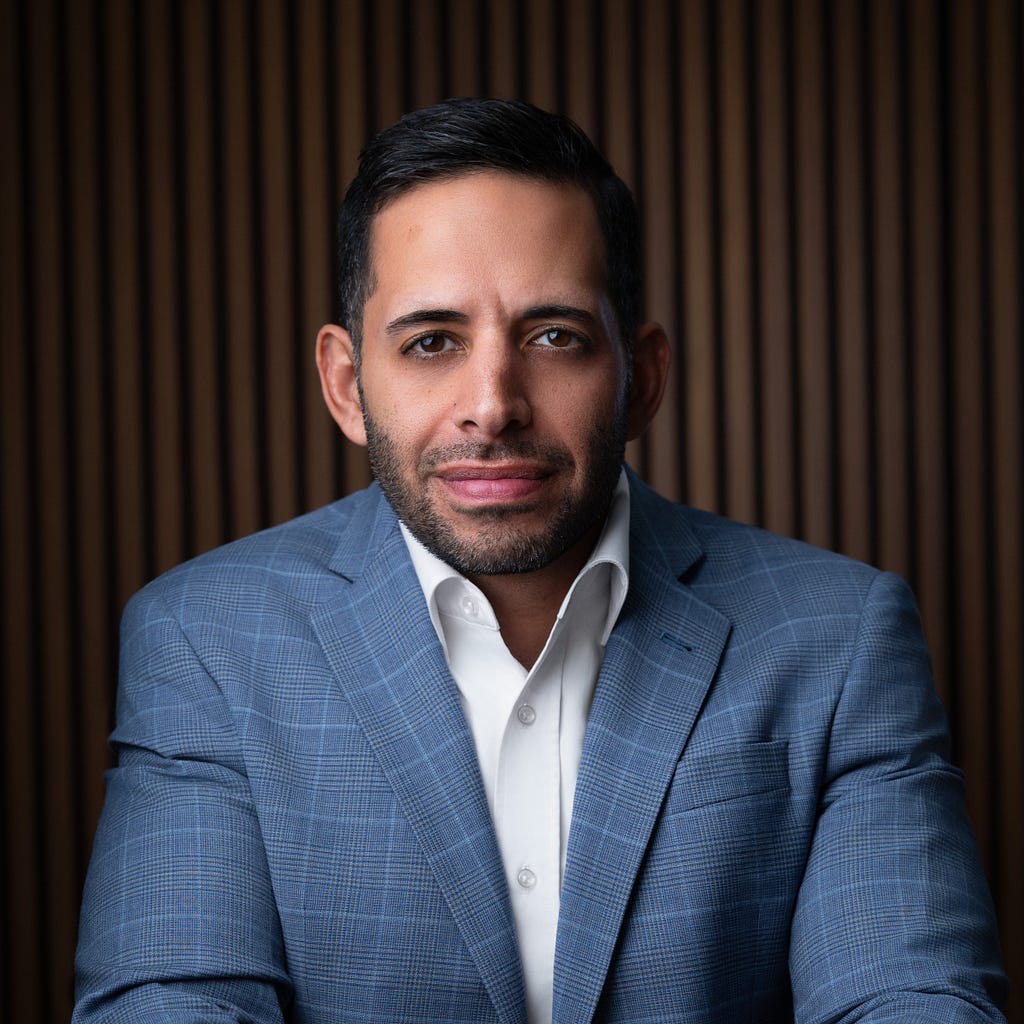
Mukhtar founded Healthy Detroit in 2013, one year after completing his undergraduate degree. The 501(c)(3) nonprofit drew inspiration from the U.S. Surgeon General’s National Prevention Strategy, using city parks as accessible hubs for health services. The organization’s HealthPark initiative, launched in July 2014, transformed several Detroit parks into one-stop wellness centers. These sites offered free fitness classes, health screenings, immunizations, and nutritional programs to residents of all ages.
Under Mukhtar’s leadership as CEO, Healthy Detroit grew substantially. He mobilized over $100 million in funding and built the nonprofit to an annual operating budget of approximately $15 million by 2017. The American Public Health Association recognized Healthy Detroit as the National Public Health Organization of the Year in 2017, citing its work in advancing health equity in underserved communities. The organization’s approach also appeared in the U.S. Surgeon General’s 2014 report to Congress. Mukhtar received the Playmakers Changemaker of the Year award in 2015 for his work in community health.
Mukhtar pursued graduate education while leading Healthy Detroit, earning dual master’s degrees in Public Policy and Public Health from Johns Hopkins University in 2017. He was selected as a Bloomberg Fellow at the Bloomberg School of Public Health, a distinction recognizing his commitment to public health education and policy. His public engagements during this period included speaking at a Washington Post Live forum on community health, addressing the Detroit Mayor’s Health Summit at Wayne State University, co-hosting an event with U.S. Senator Rand Paul focused on economic empowerment and healthcare, hosting an engagement with investor Kevin O’Leary on entrepreneurship, and introducing U.S. Surgeon General Vivek Murthy at a Detroit event.
Throughout his career, Mukhtar has held positions on several boards and committees. Mayor Mike Duggan appointed him co-chair (later chair) of the Detroit Parks & Recreation Commission. He has served on the board of the MIU Men’s Health Foundation since 2014, the Michigan Recreation & Park Association since 2016, and the Chandler Park Conservancy since 2016. He joined the steering committee of the Michigan Community Health Worker Alliance in 2017 and was appointed to the board of St. Mary Mercy Livonia Hospital in the Trinity Health System in 2018. He also serves on the external advisory board for Wayne State University’s Master of Public Health program.
After nearly five years leading Healthy Detroit, Mukhtar transitioned into consulting. He founded Healthy Communities, LLC in Washington, D.C., a boutique consulting firm focused on public policy and health. Through this firm, he advised policymakers including Speaker of the House Paul Ryan and contributed to the White House Office of American Innovation. He also established The Mukhtar Group, LLC, offering business management consulting services to private sector clients. Mukhtar currently operates Tera Strategies from Fort Lauderdale, Florida, where he serves as founder and senior business management consultant. His work focuses on partnering with CEOs, medical directors, investors, and business owners on digital transformation and organizational development. He is fluent in English, Arabic, and Spanish.
Q: You built Healthy Detroit from the ground up, securing over $100 million in funding and achieving a $15 million annual budget. What made you decide to transition from leading that organization into business consulting?
Nicholas Mukhtar: After I started my nonprofit, it got a lot of national press and attention. The rationale was that if we could get this done in Detroit, we could probably do it in a lot of other cities across the country. At that time, I started getting more involved nationally, specifically in Washington, D.C. That was initially the pivot to more of a consulting role — working with other cities and government agencies on what I had built in Detroit.
After a couple of years of doing that and spending time in D.C., I looked around and saw a lot of my mentors and peers who had spent 40, 50 years working in healthcare reform and, quite honestly, hadn’t gotten anything done. That was a scary thought — that I could be devoting 50 years of my life to something I believe in and am passionate about, but not see real outcomes.
It was a combination of that and the Washington burnout. It was around 2016, 2017. Trump had just gotten elected. I had been working in healthcare reform with the Clintons at the time. They were planning on winning the presidency, so it was a really strange time all around. I’m someone who has been very apolitical and bipartisan. I don’t think healthcare should have a political party. We all want to live in a country where we can be healthy, happy, and live prosperous lives.
Long story short, I got burnt out. I started thinking maybe Washington wasn’t the place for me. That’s where I began transitioning into the private sector — trying to find other ways to be passionate, make money, and live a good life.
Q: Your Johns Hopkins training and Bloomberg Fellowship obviously shaped your public health work. How does systems-level thinking from epidemiology and public health actually translate to diagnosing business problems?
Nicholas Mukhtar: One of the things I took away from working with the Bloomberg team, and eventually Mayor Bloomberg, was what they had done in New York City to turn the city around. They created a public-private partnership with the health department. They realized that government funding and big bureaucratic institutions just aren’t equipped for innovation. So they formed a nonprofit arm that was completely separate and independent of the government but had a real public-private partnership agreement. That led to places like Bryant Park being rejuvenated — just all-new life and an innovative way of thinking that doesn’t exist in government.
I think it’s the same thing in business. I look at companies in two buckets. One is these large, established companies that function much like big city governments — bureaucratic machines that sometimes can’t get out of their own way. The other bucket is the startup, which is much like the nonprofit I started: a group of people doing 20 different roles, trying to turn it into a real functioning business.
For large companies, you do have to think outside the box. A lot of times it takes outside thinking. I know there’s a lot of comedy about companies using the McKinseys of the world, but the rationale is sound — an outside voice that isn’t ingrained in the day-to-day can actually be creative and think differently.
From a startup perspective, it’s a bit of both buckets. You want to look at larger institutions to see what they’ve built and how they got there, but also where they messed up. Every entity and every person is unique, and you have to treat it as such. There’s no one-size-fits-all solution to any problem.
Q: You’ve worked with many business owners, and there’s often a gap between their stated problem and the actual root cause. What pattern do you see most often? And what’s one question you wish every potential client would ask themselves before reaching out for help?
Nicholas Mukhtar: This is an easy answer, and I see it constantly: communication. Even in the office I’m sitting in right now, which is with a client — the number of times I’ll have two different employees come talk to me about a problem, and it’s like, well, did you just sit down and talk about it? Did you tell her what was bothering you? Did you actually put a plan in place?
Communication is key on any team. I played sports growing up. My dad’s a legendary high school soccer coach in Michigan. Communication is the theme in sports, in business, in life, in partnerships, in marriages and families. And in some ways it’s gotten easier — like what we’re doing right now on a video call — but in a lot of ways, especially for the younger generation, it’s gotten more challenging because they don’t have those face-to-face interactions we used to have. Social media, cell phones, texting, screens in general — it’s made people a little more reserved in how they communicate.
I kid you not, that seems to be 90% of the problems across the board. People just need to talk.
People get pulled in so many directions. A lot of it is that you just need to simplify things and have a conversation: Why isn’t this working? What are the things that are bothering you? How do we make it better? I’ll have clients with employees who are threatening to leave, and I ask: Did you, as the employee, sit down with the business owner and explain why you want something different? Give them the opportunity to meet you there? Most of the time the answer is no — they just assumed they wouldn’t be able to get that, so they felt they had to look elsewhere.
It can be really that simple. Just say, “I’m X years old. This is where I’d like to be in five years. Do you have a plan for me to get there?” Let the business owner or CEO come back and tell you what they have in store.
Q: You mentioned your father. What did growing up with a legendary soccer coach teach you about business?
Nicholas Mukhtar: He taught me the art of relationships. The most important part of building relationships is showing genuineness. I remember giving my first presentation to a block club in Detroit. Detroit was a very racially divided place. While I am brown, I’m not Black. Going into communities I wasn’t from and having to pitch them on an idea — when they’ve been promised things before, when they’ve had people come in suits and lie to them — my dad’s advice to me, literally on the way to that presentation, was: They will sense if you’re genuine. If you give it to them straight, if you tell them what’s on your heart, speak from your heart and don’t speak from notes, they will believe you and they will trust you.
He’s brilliant at that. I run into people every day, all over, who say, “Are you Coach Mukhtar’s son? I had him as a teacher or a soccer coach, and the life lessons he taught me — I wouldn’t be the CEO of this company if it wasn’t for your dad.” He still maintains those relationships, and they’re not fake. They’re real. He truly cares about all those players and former students.
I try to do that as well. You’re never going to get any fakeness from me. I wear my heart on my sleeve, and that’s something I got from him. If people know you care about them, you can do a lot. Don’t take this the wrong way, but you can get away with a lot. People who know you have their back and their best interest — they will take you at your word.
Q: You work extensively with family offices on governance, succession, and long-term planning. What’s the biggest governance mistake you see family offices make repeatedly? And what do the ones who get it right have in common?
Nicholas Mukhtar: The biggest mistake is not getting their kids involved early enough. You don’t know what life has in store. Sometimes it’s clients of clients, but you’ll see situations where someone passes away or there’s an accident, and the children truly have no idea what their parents built, how they built it, how things are set up, or what to do.
On the other side, I’ve seen clients who do a great job. They set their kids up with a small account at 10 or 11 years old, have them pick stocks, teach them the value of time in the market, saving money, creating buckets — “Say I have a lemonade stand: put 30% here, put 30% here, put 30% here.” Just looking at things differently.
The ones who make mistakes are often so busy building their business — doing what obviously led to their success and wealth — that they forget why they’re doing it: for their family and the next generation. Getting your kids involved, getting your spouse involved, having a true partnership — that’s the key. I see a lot of couples where one person handles everything on one side and the other handles everything on the other, and neither knows what the other is doing.
When you’re a high-level, high-performing individual, the overstimulation is on a whole other level. They’re getting invited to an event every night, going to this charity event or that. It’s very hard to slow down and actually do some family planning with the people who matter. The ones who do it well keep their kids and their partner very involved. The ones who struggle don’t.
Q: Your dual master’s degrees in public policy and public health from Hopkins give you a unique lens for working with medical directors. What’s the core tension medical directors face when trying to bridge clinical excellence with business performance?
Nicholas Mukhtar: We are in a very overly regulated, overly complex healthcare market. The family doctor who ran his own practice with a young lady at the front desk and a couple of nurses — that model doesn’t really exist anymore. It doesn’t exist because of how difficult it is to work with insurance companies, how difficult it is to work with government agencies. And it’s not just healthcare; a lot of industries are like this. The overregulation has gotten in the way of people being able to run businesses and, more importantly, treat people. That’s what people want to be doctors for. That’s what people want to be nurses and PAs and nurse practitioners for. They want to help people and serve people. And it feels like they’re constantly being bombarded with paperwork and regulatory requirements.
I see the same thing in the wealth management industry. You have people who genuinely want to help their clients. They’re not stealing from anyone, not misleading anyone, but they’re constantly dealing with headaches from the SEC and FINRA.
To be fair, there are good reasons why we need regulatory bodies, and they serve an important function. I’m not anti-regulation, but I am pro-simplification. The more complex we make these systems, the people at the bottom are the ones who get hurt the most. That’s not what any of us got into this field for.
Q: You’ve observed that leadership expectations are shifting — less flash, more substance. What’s driving that shift?
Nicholas Mukhtar: I’d push back on the question a bit, because I still think you see very different types of leaders. There’s not one-size-fits-all. If I talk to 10 CEOs, they all have a very different style, a different way of looking at things. A Jamie Dimon approaches things very differently than the Google CEO. You really do have to take it case by case.
I’ve worked with business owners who are adamant that everyone in the office wears a suit and tie, and others who think that’s silly. They each have reasons for why they feel the way they feel.
I’m trying to think of consistent themes that have driven a shift. I don’t know that it’s as much of a shift as it is just that everyone is different. That said, social media has changed a lot. The presence of cameras has changed how people go about their day-to-day lives. That’s probably very different from how it was 20 years ago.
Q: Executive burnout has become a major conversation in business circles. From your consulting work, what are you actually observing?
Nicholas Mukhtar: It’s a twofold thing. I’m seeing a generation of leaders getting very burnt out, and a generation of new employees or young people entering the workforce who are — and I say this boldly — contributing in a lot of ways to that burnout.
There’s a divide between generations. You have a generation that was always first one at the office, last one to leave. That’s how they came up — work, work, work, work, work. And then you have a generation that doesn’t feel the same way. Some of it is entitlement; some of it is just kids being kids. If you went back 50 years, they’d probably say the same thing about the younger generation.
But I’m seeing constant frustration. I’ll be sitting in an office and the CEO is there at six or seven still working, and the 22- and 23-year-olds are out by 4:30 or 5:00. To get to where the CEO is, you have to be willing to do those things. But the younger employees want the CEO role and the CEO money without understanding what the CEO actually did to get there. It’s not all rainbows and butterflies. You might see him drive a Ferrari now, but that took years of grinding, in some cases six days a week.
It’s not that there isn’t a willingness to work — I think they just want to work differently. And it’s not to say they’re wrong, because I don’t know. But I’m seeing a divide. The older generation at the higher end of their careers, thinking about retirement, feel frustrated because they don’t feel comfortable handing things to the next generation when they don’t sense the same passion and work ethic. That’s a constant complaint I hear across the board — engineering, wealth management, healthcare. Loyalty isn’t as common as it once was.
Q: What are you most excited about over the next few years, professionally or personally?
Nicholas Mukhtar: Personally, I got married this past year and we bought a home here in South Florida. My wife is born and raised in Fort Lauderdale. She’s from a Puerto Rican and Cuban family, and I’m from a Catholic Middle Eastern family. So we have big cultural similarities and differences, which are fun. Our goal is to focus on our family and build our family.
Professionally, I’d like to take on a very impactful project where I can see tangible outcomes on causes I’m passionate about — specifically healthcare and healthcare reform. I spent several years working on Medicaid reform, and that’s something I would love to be involved in again. I think there’s a lot of opportunity to use Medicaid to really help people and get them to a place where they’re healthy and contributing members of society. I don’t think that’s how our Medicaid system is being used today.
I’d also love to grow my business to a point where I can be more selective in the types of projects I work on and the clients I work with. But I think that’s every consultant’s goal. I like helping people. I like taking on projects where I can see outcomes. I’m an outcomes-driven person. I don’t like working on things where you won’t see results for a hundred years.
That was a big benefit of Healthy Detroit. I’d see kids playing basketball with a deflated ball and two construction barrels. That was my initial inspiration — I was driving around the city around 2010, 2011, and I saw these kids in a major American city who didn’t even have a place to play. They didn’t choose to be born in that zip code. They didn’t even have a park. I had 10 parks to choose from, a gym, my own high school. So I started reaching out to corporations and saying, “We can build them a basketball court for three grand. Let’s do this.” And we were able to see those changes almost overnight. Even now, I take my wife back and show her — there are kids playing in that park. That was an abandoned lot we helped fix up. That’s my passion. That’s what drives me.
Q: You speak English and Arabic and you’re working on Spanish. How does your cultural fluency show up in your consulting work?
Nicholas Mukhtar: It does and it doesn’t. In a lot of ways, I purposely try to keep it separate because of how political the world has gotten. That said, it has helped me. I worked in D.C. for a couple of years with the White House Office of American Innovation. I played a role in Middle Eastern peace talks, and being able to speak the language, being brown, working alongside someone I considered a brother who was Jewish — things like that helped. Both of us being in the same room and understanding both sides of the culture was valuable.
At the same time, I’m not Muslim, and that played a role. A lot of the Arab or Middle Eastern community views me as an outsider because we’re a Christian minority group from Northern Iraq — a unique minority group in its own little bubble.
When I moved to South Florida, there’s obviously a huge Latino influence. I married a Latina, so I’m learning Spanish. I have so much respect for different cultures. I love learning languages. My friends make fun of me, but my Apple Music has French music, Arabic music, Spanish music. I just love it.
One thing I’ll add is that my grandfather, my dad, and my mom were all born in Northern Iraq. They fled persecution and came to the United States. My grandfather would always tell us: In our home, we’ll speak Arabic, we’ll eat our Arabic food, we’ll respect our culture, and you’ll always be an Iraqi American. But when you leave the house, you’re an American. I want you to learn English, respect the culture here, and learn about other cultures. That’s how my family was raised. We have tremendous respect for our heritage, but we’re also very proud to be American. My grandfather wore an American flag lapel pin until the day he died.
Q: Is there anything we didn’t cover that you’d like to mention?
Nicholas Mukhtar: My passion for Healthy Detroit is really important to me. I think that story speaks to how I was raised and how I view things. I was on a path to becoming a medical student and a doctor. Being in Detroit at a very unique time in the city’s history and seeing some of the things I described — it opened my eyes. I’m the type of person who sees a problem and wants to fix it. That applies to the world, to business, to companies, to my family.
I think I’m good at figuring things out, good at communicating, problem-solving, being logical, being level-headed. A lot of times that’s half the battle. Even politically in the United States, you have 5% on the fringe of either side creating this huge divide. Most people are in the middle and just want a good life for themselves and their families.
It goes back to the communication point. You just have to sit down and talk, because you realize people aren’t that different. They don’t want that much different. At the end of the day, we’re all humans who want to live in a peaceful world and take care of each other. It’s not much different in business.
Originally published at https://interview.net on February 16, 2026.

Most business consultants arrive at the profession through finance, accounting, or a stint at a major firm. Nicholas Mukhtar took a different route. Before advising CEOs and family offices on operational efficiency, he ran a nonprofit that transformed Detroit parks into community health centers, earned dual master’s degrees from Johns Hopkins University as a Bloomberg Fellow, and consulted for congressional leaders on public health policy.
That background shows up in how he approaches corporate problems. Where other consultants might default to cost-cutting or restructuring, Mukhtar tends to frame challenges through a public health lens: prevention over treatment, systems over symptoms, and scalability built from the start. His client roster at Tera Strategies, the Fort Lauderdale-based firm he founded, includes family offices, wealth management practices, and business owners seeking help with digital transformation and streamlined operations.
From Medicine to Prevention
Nicholas Mukhtar grew up in Metro Detroit. He began college at the University of Dayton on a full academic scholarship as a Chaminade Scholar, then transferred to Wayne State University when his mother’s battle with cancer required him to be closer to family. He finished his bachelor’s degree in 2013 and, rather than continue down the medical track he had been pursuing, shifted course entirely.
A 2018 profile in Parks & Recreation Magazine described the turning point: “As Nicholas Mukhtar was finishing his medical degree in Detroit, he began to see a different side of healthcare. Rather than follow the career path of a surgeon, focusing on treating people once they became sick, he decided he’d create systems change at the community level and focus on prevention.”
That shift came after he read through the Affordable Care Act and its emphasis on the U.S. Surgeon General’s National Prevention Strategy. Mukhtar recognized that clinical medicine addressed problems downstream; population-level prevention could reduce the volume of problems reaching clinicians at all.
Just one year after graduating from Wayne State, he founded Healthy Detroit, a 501(c)(3) nonprofit dedicated to building what he called “a culture of healthy, active living” across the city. His approach was unconventional: rather than opening clinics or hiring doctors, he partnered with Detroit’s Parks & Recreation Department to transform public parks into wellness hubs.
The Bloomberg Fellowship and Systems Thinking
Healthy Detroit’s HealthPark initiative launched in July 2014. Parks across Detroit became one-stop wellness centers offering free fitness classes, health screenings, nutritional programs, and connections to social services. Mukhtar explained the logic at the time: “We chose city parks as our vehicle for building a culture of health because it’s the one piece of a community that has no barriers or limitations.”
That philosophy-finding delivery mechanisms without barriers-would later inform his corporate consulting work. But first came graduate school.
While serving as CEO of Healthy Detroit, Nicholas Mukhtar enrolled at Johns Hopkins University as a Bloomberg Fellow. He completed dual master’s degrees in Public Policy and Public Health by 2017. Bloomberg Philanthropies funded the fellowship with a $300 million gift in 2016, creating a pipeline that awards full-tuition scholarships to professionals tackling urgent health issues across the country. Fellows are embedded within their organizations during training and commit to applying their new skills for at least one year after graduation.
Public health programs at Johns Hopkins assume that population-level problems require cross-disciplinary thinking. Fellows study epidemiology alongside policy analysis, learning to trace how upstream decisions create downstream health outcomes. For Mukhtar, who had already built a nonprofit from scratch, the curriculum offered frameworks to articulate what he had been doing intuitively.
Healthy Detroit’s growth validated those frameworks. Under Mukhtar’s leadership, the organization raised over $100 million in funding and reached an annual operating budget of roughly $15 million by 2017. That same year, the American Public Health Association named Healthy Detroit the National Public Health Organization of the Year-a recognition typically reserved for established institutions rather than startups led by someone in his early thirties.
National attention followed. Healthy Detroit was one of only three organizations featured in the U.S. Surgeon General’s 2014 Report to the President and Congress on the National Prevention Strategy. Mukhtar also received the Playmakers Changemaker of the Year award in 2015 for his work driving community health improvements.
What made these achievements possible, according to Mukhtar, was treating the nonprofit like a system rather than a collection of programs. Each HealthPark followed the same model: residents received biometric assessments, were connected to partner services through an on-site virtual network, and carried a “Healthy Detroit Passport” that tracked their engagement and rewarded participation. Passport data collected aggregate information while empowering individuals to monitor their own progress.
Replicability mattered as much as initial impact. A program that worked in one park but couldn’t be duplicated across the city would have limited reach. Nicholas Mukhtar designed Healthy Detroit’s infrastructure with scale in mind from day one-a habit he would carry into private-sector consulting.
From Nonprofit Leadership to Corporate Advisory
Nicholas Mukhtar stepped away from Healthy Detroit after nearly seven years as Founder and CEO, transitioning the organization into a public-private partnership with the City of Detroit and Wayne County. His next move took him to Washington, D.C., where he founded Healthy Communities, a boutique consulting firm focused on public policy.
His client list reflected the network he built during the Bloomberg Fellowship and Healthy Detroit years. Mukhtar advised Speaker of the House Paul Ryan, contributed to the White House’s Office of American Innovation, and worked with Senators Rand Paul and Tim Scott on health policy matters. Other clients included the City of Austin, Texas; Wayne State University; and Orlando Health.
By 2019, he had broadened his practice beyond public health. He founded Tera Strategies in Fort Lauderdale, Florida, applying the operational frameworks he developed in the nonprofit sector to corporate clients. His current roster includes family offices, wealth management practices, and business owners pursuing digital transformation and organizational development.
A focus on prevention-oriented thinking connects Healthy Detroit to Tera Strategies. Public health professionals are trained to ask why problems occur rather than simply treating their symptoms. Mukhtar applies similar logic to corporate dysfunction. When a company struggles with execution, he looks for upstream causes: unclear decision-making authority, systems designed for a smaller scale, or priorities that fragment rather than focus leadership attention.
“It is important to stress that successful partnerships must have mutual benefits for all parties, and these benefits must be explicit and transparent,” Mukhtar noted in his 2017 presentation at the National Recreation and Park Association Annual Conference. “Partnerships that are formed in which one side benefits and the other side does not are not sustainable and will not be successful.”
That principle-sustainability through mutual benefit-applies equally to vendor relationships, employee retention, and client engagements. Nicholas Mukhtar’s consulting work at Tera Strategies centers on building systems that function without constant intervention, much like the HealthPark model he designed to operate across multiple Detroit parks without requiring his personal oversight at each location.
His board memberships reinforce the connection between his public health roots and corporate present. He has served on the boards of Trinity Health System-Livonia, the Men’s Health Foundation, and Wayne State University School of Medicine’s External MPH Advisory Board. Detroit Mayor Mike Duggan appointed him to chair the Detroit Parks & Recreation Commission.
Few consultants can point to a Surgeon General’s report and an APHA award as credentials. For Nicholas Mukhtar, that background isn’t incidental to his advisory work-it shapes how he diagnoses problems, designs interventions, and measures success.
Originally published at https://www.newsanyway.com on February 13, 2026.

Fort Lauderdale consultant Nicholas Mukhtar has published new commentary examining how executives and business owners can strengthen their decision-making capabilities during periods of sustained uncertainty. His analysis addresses a widening gap that industry researchers have identified between the pace of organizational transformation and the internal systems designed to support leaders through change.
Mukhtar, who serves as a senior business management consultant at Tera Strategies, advises CEOs, family offices, and business owners on developing efficient processes and operations. His latest observations arrive as leadership consultancies report that 2026 will test executives in ways that traditional planning alone cannot solve.
McLean & Company’s HR Trends Report 2026 warned of a growing structural risk: leadership capacity is no longer keeping pace with the demands being placed on it. “Organizations are trying to move faster than ever, but their systems for leadership, culture, and change haven’t fully caught up,” stated Karen Mann, Senior Vice President of human resources research at McLean & Company.
Nicholas Mukhtar’s work addresses this precise tension. His consulting practice centers on helping organizations develop systems and processes that drive measurable progress toward their objectives.
Accumulating pressures demand new approaches
Leadership consultancy RHR International surveyed its consultants about challenges facing chief executive officers, chief human resources officers, and executive teams heading into 2026. One message emerged with particular force: leadership is getting harder, not simply due to uncertainty but because of the accumulation of pressure, complexity, and expectation occurring simultaneously.
Nicholas Mukhtar’s background spans both public health leadership and private sector consulting, giving him an unusual vantage point on organizational decision-making. He founded Healthy Detroit in 2013 , a nonprofit focused on preventative health that reached an annual operating budget of $15 million by 2017 and secured more than $100 million to support community wellness programs. That experience building systems under resource constraints now informs his work with family offices and business owners facing their own operational pressures.
From hero to architect: Rethinking leadership identity
A November 2025 article in Harvard Business Review captured a dynamic that Nicholas Mukhtar frequently addresses with his clients. Author Bill Flynn observed that many leaders who excel early in their careers eventually become the very reason their organizations stall. Traits that once fueled their success, such as solving problems through personal effort, making rapid decisions based on instinct, and driving outcomes through sheer will, often become liabilities in more complex environments that call for scale.
Flynn described the necessary transition as moving from “hero to architect,” which involves clarifying intent, codifying principles, and building decision systems others can use without constant executive involvement.
Mukhtar’s consulting work reflects this framework. According to a 2018 profile in Parks & Recreation Magazine, he shifted away from a traditional medical career after deciding to “create systems change at the community level and focus on prevention” rather than becoming a clinician. That same orientation toward building durable systems rather than solving individual problems now defines his approach to business consulting.
His client roster includes several family offices, two large wealth management practices, and a handful of successful business owners. For each, the challenge remains consistent: how to make decisions that hold up across changing conditions without requiring the founder or principal to personally approve every significant action.
Scenario planning remains underutilized
McLean & Company’s research revealed a striking gap in organizational preparedness. Only 22% of organizations report using a structured, documented scenario-planning approach. Yet those that do are 2.1 times more likely to be high performers in innovation and 1.8 times more likely to excel at executing goals.
Nicholas Mukhtar’s analysis emphasizes that decision-making quality deteriorates when leaders attempt to process every variable personally rather than establishing frameworks that allow distributed judgment. His dual master’s degrees from Johns Hopkins University in Public Policy and Public Health, earned as a Bloomberg Fellow, provided formal training in systems analysis and policy design. That academic foundation supports his current work helping organizations codify their decision-making processes.
Matt Dallisson, managing partner at Signium in London, offered a complementary perspective in December 2025. He noted that traditional hierarchies are proving too rigid for the speed and complexity of current operating environments. Agile leadership supports necessary shifts by promoting empowered, autonomous teams, reducing dependence on hierarchical escalation, and enabling decisions to be made closer to real-time information.
Simplification as competitive advantage
McKinsey researchers examining traits of high-performing CEOs highlighted a counterintuitive finding: the most effective leaders are actively reducing organizational complexity rather than managing it. Nvidia CEO Jensen Huang explained his preference for simpler organizational structures in terms of collaboration rather than efficiency. “I love that there is no privileged access to information,” Huang stated in an interview. Everyone works from the same information base, he noted, and hears the reasoning behind both the problem and the solution.
JPMorgan Chase CEO Jamie Dimon reinforced this orientation, advising leaders to eliminate bureaucracy continuously and without hesitation.
Nicholas Mukhtar’s commentary reflects similar principles. His work with family offices and wealth management practices centers on removing approval layers that slow organizational response without adding meaningful oversight. When he founded Healthy Detroit and led it through nearly five years of growth, he built partnerships across public and private sectors that required clear decision rights and accountability structures.
Values must anchor everyday decisions
McLean & Company’s research surfaced another finding with direct relevance to Mukhtar’s analysis: values cannot remain aspirational; they must anchor everyday decision-making. Yet fewer than half of organizations hold leaders accountable for acting in alignment with stated values.
CEO Today Magazine captured the implication for executives heading into 2026. AI is changing the way choices are made but is not replacing leadership, the publication noted. Good leadership has greater impact under these conditions, while poor leadership becomes more exposed. Leaders should let AI handle speed and scale while focusing their own efforts on meaning, values, and direction.
Nicholas Mukhtar brings unusual breadth to these questions. His career spans founding a nonprofit that the American Public Health Association named National Public Health Organization of the Year in 2017, advising congressional leaders including Speaker Paul Ryan, and now counseling private sector clients on operational efficiency. That range of experience positions him to address decision-making challenges that cut across sectors and organizational types.
His new analysis does not promise to eliminate uncertainty. What it offers is a framework for distributing judgment across organizations in ways that preserve accountability while enabling faster, more consistent action.
Originally published at https://www.business-money.com on February 13, 2026.